Does lion’s mane work for focus? A Neuro Fortis Pro evidence check
Does lion’s mane work? The honest answer is a cautious “maybe, a little”: this shaggy culinary mushroom carries centuries of tradition and some genuinely encouraging early human research for focus and memory, but the studies are small and the hype has run well ahead of the proof. Here we separate what is actually shown from what is merely claimed, and explain how lion’s mane is used at a sensible label level inside Neuro Fortis Pro.
Does lion’s mane really work for focus, in one honest paragraph.
- The verdict
- Promising but unproven — lion’s mane is reasonable daily support for a healthy mind, not a proven focus drug.
- What the evidence shows
- Small human trials hint at modest memory and mood benefits during use; large, long-term proof is still missing.
- Typical study dose
- Roughly 1,000–3,000 mg a day for eight to sixteen weeks — not a same-day stimulant.
- How to use it well
- Treat it as one part of a routine with sleep, movement and whole foods — and check the label dose.
Few supplements have gone from obscure foraged mushroom to viral “brain food” as fast as lion’s mane (Hericium erinaceus). Social feeds promise laser focus and near-instant clarity; tradition tells a quieter story about a food valued for a calm head. This guide walks through the tradition, the human data, and where Neuro Fortis Pro fits — without overselling it.

What is lion’s mane, and does it actually work?
Lion’s mane is an edible mushroom that has been eaten and brewed as a tonic across East Asia for centuries, and today it is one of the most popular nootropic ingredients in the world. Whether it “works” depends on what you expect: as a whole food and a gentle daily support for a healthy mind, it has a long and reassuring track record; as a guaranteed, measurable focus booster, the science is simply not there yet. The compounds researchers find most interesting — hericenones in the fruiting body and erinacines in the mycelium — can influence nerve-growth factor (NGF) in laboratory settings, which is the biological hook behind most of the excitement. That is a mechanism worth studying, not a promise of results in your own head this week.
Why does lion’s mane get so much hype?
The hype around lion’s mane comes from a tidy, shareable story: a natural mushroom that nudges the very growth factors your neurons use to repair and connect. That narrative is compelling and not baseless — but it leans on cell-culture and animal work rather than large human trials. Three things inflate the claims online: dramatic lab findings get repeated as if they happened in people, personal anecdotes spread faster than cautious data, and marketing rarely mentions dose or how long benefits last. A fair reading keeps the interesting mechanism while discounting the miracle framing.

What does the evidence actually say?
The current evidence for lion’s mane is best described as early, small and cautiously positive rather than settled. A handful of human studies exist, but they are short, involve few participants, and do not all agree — which is exactly why honest write-ups avoid strong claims. The most recent double-blind trial in young adults reported an acute effect on speed of performance alongside more mixed chronic outcomes (Docherty S et al., Nutrients 2023).
What do human trials show?
The most-cited human trial is a 2009 Japanese study in older adults with mild cognitive complaints, in which those taking lion’s mane scored better on a cognitive scale during the sixteen weeks of use — and drifted back down after stopping. A few smaller studies since then report modest improvements in mood, irritability or subjective focus. These are genuine signals worth following, but with dozens rather than thousands of participants, they cannot carry the weight of the bolder marketing claims. That trial reported improvement on a cognitive scale while participants kept taking the mushroom, with scores drifting back afterwards (Mori K et al., Phytother Res 2009).
Why is the animal-to-human gap important?
Much of the “lion’s mane regrows your brain” excitement traces back to rodent and petri-dish studies where erinacines boosted NGF. Those results are real, but mice are not people, and a compound that raises NGF in a dish may behave very differently after digestion, at food-level doses, in a human body. Treating that gap as already bridged is the most common mistake in lion’s mane content. The erinacine work that fuels those headlines is largely laboratory and animal research (Li I-C et al., Behav Neurol 2018).
Does lion’s mane help memory and focus differently?
It helps to separate the two. For memory, the small older-adult trials are the strongest thread, hinting at recall support during consistent use. For focus in the moment, evidence is thinner and more subjective — lion’s mane is not a stimulant and will not feel like caffeine. For a same-day lift, sleep, a short walk or a cup of tea do the job; lion’s mane plays the slow, background role.
See the exact lion’s mane dose in Neuro Fortis Pro →
How is lion’s mane used in Neuro Fortis Pro?
In Neuro Fortis Pro, lion’s mane is one supporting ingredient in a once-daily blend, not a mega-dosed hero marketed as a cure. The smartest way to use an ingredient with early evidence is at a sensible, label-disclosed level alongside other well-studied botanicals, so no single mushroom carries the whole promise. Most human studies use 1,000 to 3,000 mg of lion’s mane a day; the amount in each capsule is printed on the Supplement Facts panel so you can compare it against the research yourself.
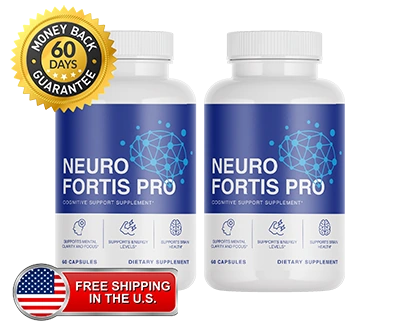
Neuro Fortis Pro pairs lion’s mane with bacopa monnieri, ginkgo biloba, green tea and grape seed extract, plus a small amount of huperzine A. For how these ingredients differ, compare our guides to lion’s mane vs bacopa and to bacopa, lion’s mane and huperzine A. Bacopa is the better-evidenced of the pair; our guide to bacopa monnieri benefits and dosage explains the dose range its trials used.
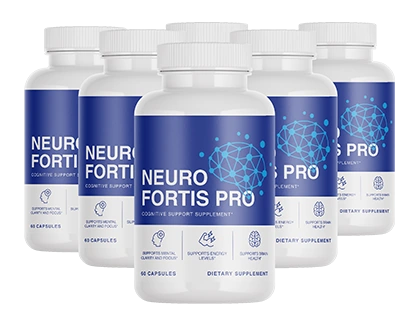
Want the whole blend, not just one mushroom?
Neuro Fortis Pro combines lion’s mane with bacopa, ginkgo, green tea and grape seed in a single daily capsule. The six-bottle bundle is the best value at $49 per bottle, with free U.S. shipping and a 60-day money-back guarantee.
Check today’s Neuro Fortis Pro pricing — from $49/bottleTradition versus evidence: a claim-by-claim table
Not every lion’s mane claim carries the same weight, so it helps to sort them by how much real support each one has. The table below rates common claims from strongest to weakest evidence — a quick reality check before you believe a headline.
| Common claim | Evidence status | Honest reading |
|---|---|---|
| Traditional food for a clear head | Strong (historical use) | Well established as a culinary and folk tonic across East Asia. |
| Supports memory in older adults | Early / promising | A few small trials hint at recall support during use; benefits fade after stopping. |
| Eases low mood or irritability | Limited | A small study or two suggest subjective mood benefits; needs replication. |
| Boosts NGF and “regrows” the brain | Lab / animal only | Real in dishes and rodents; not shown to translate to human brains at food doses. |
| Instant, same-day focus like caffeine | Not supported | Lion’s mane is not a stimulant; any effect builds slowly, if at all. |
How long does lion’s mane take to work?
Lion’s mane is a slow-build ingredient, so a realistic expectation is two to three months of daily use before you judge it, not two days. The studies that report any benefit almost all run for eight to sixteen weeks of consistent dosing, which is why running out mid-routine is the most common reason people conclude “it did nothing.” The table below sets expectations against the kind of results people actually chase.
| What you want | Is lion’s mane the right tool? | Realistic timeframe |
|---|---|---|
| A jolt of alertness right now | No — try a walk, sleep or tea | Minutes to hours (from the alternative) |
| Steadier day-to-day clarity | Maybe, as background support | Several weeks of daily use |
| Memory support in older age | Possibly, per small trials | 8–16 weeks, ongoing |
| A cure for a diagnosed condition | No — see a doctor | Not applicable |
Because botanicals build their support gradually, most people choose a multi-month supply so they do not stop right before the window when studies see any effect — compare the packages and pricing on the homepage, or read our practical guide to improving memory and focus naturally.
Who should be cautious with lion’s mane?
Lion’s mane is a food and is generally well tolerated, but it is not right for everyone. Because it is a mushroom, anyone with a mushroom or mould allergy should avoid it, and mild digestive upset is the most commonly reported side effect. Talk to your doctor first if you are pregnant or nursing, under 18, take any medication, have a diagnosed condition, or are scheduled for surgery. Natural does not automatically mean risk-free, and lion’s mane supports a healthy mind rather than treating any disease.
Frequently asked questions
Does lion's mane work for focus?
Lion's mane has a long food and folk tradition for a clear head, and small human trials are cautiously encouraging, but the evidence is still early and mixed. It is best seen as gentle daily support alongside sleep, movement and whole foods, not as a proven focus drug.
How much lion's mane do studies use?
Most human studies use roughly 1,000 to 3,000 mg of lion's mane powder or extract per day, split across the day. Neuro Fortis Pro lists its exact lion's mane amount on the Supplement Facts panel so you can compare it with the research yourself.
Does lion's mane help memory?
A few short trials in older adults report small improvements in memory scores while people keep taking lion's mane, with benefits fading after they stop. The findings are promising but limited, so lion's mane is a support for a healthy memory, not a treatment for memory loss.
How long does lion's mane take to work?
Lion's mane is not a same-day stimulant. Most studies that report any benefit run for eight to sixteen weeks of daily use, so a realistic expectation is to give it two to three consistent months before judging it, and individual results vary.
Is lion's mane safe to take every day?
Lion's mane is a culinary mushroom and is generally well tolerated in studies, with occasional mild digestive upset. Anyone pregnant or nursing, taking medication, allergic to mushrooms or managing a health condition should ask a doctor before daily use.
Why is lion's mane in Neuro Fortis Pro?
Neuro Fortis Pro pairs lion's mane with bacopa, ginkgo, green tea and grape seed so no single ingredient has to do all the work. Lion's mane contributes its traditional clear-head reputation as one part of a once-daily nootropic blend, not as a stand-alone cure.
Try Neuro Fortis Pro risk-free for 60 days →
Neuro Fortis Pro is a dietary supplement, not a treatment for any medical condition. These statements have not been evaluated by the Food and Drug Administration. This product is not intended to diagnose, treat, cure or prevent any disease. Always consult a qualified healthcare professional about your individual needs.
References & further reading
- National Center for Complementary and Integrative Health (NCCIH). Cognitive Health. NCCIH — Cognitive Health
- Mori K, et al. Improving effects of Hericium erinaceus on mild cognitive impairment: a double-blind trial. (PMID 18844328) Mori K et al., Phytother Res 2009 (PMID 18844328)
- Li I-C, et al. Neurohealth properties of Hericium erinaceus mycelia enriched with erinacines. (PMC5987239) Li I-C et al., Behav Neurol 2018 (PMC5987239)
- Docherty S, et al. The acute and chronic effects of lion’s mane supplementation on cognition and mood. (PMC10675414) Docherty S et al., Nutrients 2023 (PMC10675414)
- Examine.com. Lion’s mane (Hericium erinaceus) — evidence-based summary. examine.com/supplements/lions-mane
These references describe the ingredient and habits in general terms and do not constitute evidence that any product treats, cures or prevents any condition.