Huperzine A benefits and dosage: the finishing touch in Neuro Fortis Pro
Huperzine A is a purified compound from the club moss Huperzia serrata that is studied for its role in supporting acetylcholine, a key learning-and-memory messenger — and in everyday supplements it is dosed in micrograms, not milligrams. That microgram footprint is exactly why it works as a finishing touch rather than a headline act, and why Neuro Fortis Pro uses a small, measured amount to round out its bacopa and lion’s mane base.
Huperzine A benefits and dosage, in one place.
- What it is
- A standardized extract of Huperzia serrata (Chinese club moss), valued as an acetylcholine-supporting nootropic compound.
- Typical dose
- Most label servings fall between roughly 50 and 200 micrograms — a microgram, not a milligram, ingredient.
- Why people use it
- Everyday memory and focus support; human evidence is still developing, so treat it as one supporting nutrient.
- How it is used
- Best inside a blend rather than alone, and often cycled rather than taken non-stop.
If you have read a nootropic label and spotted a tiny number followed by “mcg” near the bottom, there is a good chance it was huperzine A — one of the most distinctive ingredients in the cognitive-wellness world precisely because so little of it appears per serving. This deep-dive explains what huperzine A is, what the evidence does and does not say, how it is dosed, and where it fits as the finishing note in Neuro Fortis Pro.
What is huperzine A, and where does it come from?
Huperzine A is a naturally occurring alkaloid isolated from Huperzia serrata, a Chinese club moss that has been used in traditional folk practice for generations. Rather than grinding up the whole plant, modern supplements use a purified, standardized extract so the amount per serving is precise and repeatable — important for an ingredient measured in millionths of a gram. In other words, huperzine A is not a herb you eat by the spoonful; it is a concentrated compound where the dose is counted in micrograms.
Why is it called an acetylcholine-supporting compound?
Acetylcholine is one of the brain’s primary neurotransmitters for attention, learning and memory. Huperzine A is studied as a reversible acetylcholinesterase inhibitor — laboratory shorthand for a compound that slows the enzyme which normally breaks acetylcholine down, which in theory may help keep more of the messenger available. It is a mechanism worth understanding, but a mechanism in a test tube is not the same as a proven everyday benefit — the honest distinction we keep coming back to below. A review of huperzine A’s pharmacology sets out that acetylcholinesterase mechanism and how far it has actually been tested (Qian ZM & Ke Y, Front Aging Neurosci 2014).
What are the benefits people look for from huperzine A?
The benefit people most often associate with huperzine A is support for everyday memory and focus, which follows directly from its acetylcholine-linked mechanism. In practice, users reach for it hoping for a little more mental clarity during reading, planning and conversation — the ordinary cognitive tasks of a busy day. It is popular in student and professional nootropic stacks for exactly that reason.
That said, the research picture deserves a clear-eyed read. Much of the most-cited work comes from specific clinical populations or from laboratory and animal models, and reviewers note that trials have been small or of variable quality. There is genuine scientific interest here, but the everyday-wellness evidence in healthy adults is still developing. The responsible takeaway: huperzine A is a promising supporting nutrient, not a proven stand-alone answer, and it is not a treatment for any disease. A systematic review and meta-analysis of randomised clinical trials concluded that the reported effects were limited by the poor methodological quality of the underlying studies (Yang G et al., PLoS One 2013).

What is a typical huperzine A dosage?
A typical huperzine A dosage in over-the-counter nootropics is measured in micrograms — most commonly somewhere between about 50 and 200 mcg per serving — which is a fraction of the amount you would see for a herb like bacopa. Because it is so potent by weight, more is not automatically better, and reputable formulas keep the amount small and precise. The table below shows how huperzine A’s footprint compares with the better-studied botanicals it usually keeps company with.
| Ingredient | Typical serving footprint | Role in a blend |
|---|---|---|
| Huperzine A | Micrograms (about 50–200 mcg) | Finishing touch — acetylcholine support |
| Bacopa monnieri | Hundreds of milligrams | Core botanical for memory & learning |
| Lion’s mane | Hundreds of milligrams to grams | Culinary-mushroom focus staple |
| Ginkgo biloba | Tens to hundreds of milligrams | Circulation & mental sharpness |
| Green tea extract | Hundreds of milligrams | Polyphenols plus calm-focus L-theanine |
The pattern is clear: huperzine A is the one ingredient dosed in micrograms. That is not a shortfall — it is the whole point. It is the small, sharpening top-note on a much larger botanical foundation, which is precisely how green tea and the other supporting nutrients are layered together.
Should huperzine A be cycled?
Because huperzine A stays active in the body relatively longer than many botanicals, a common approach is to cycle it — using it for a stretch of days and then pausing — rather than taking it continuously without a break. Many formula makers build this rhythm in by keeping the per-serving amount modest. There is no single official schedule, which is another reason to follow the label on whatever product you choose and to raise any questions with a healthcare professional.
See the exact huperzine A dose in Neuro Fortis Pro →
How does huperzine A fit into Neuro Fortis Pro?
In Neuro Fortis Pro, huperzine A is the finishing touch — a small, standardized microgram amount layered on top of a base of bacopa, lion’s mane, ginkgo, green tea and grape seed extract. The design idea is straightforward: build the formula on the better-studied botanicals that do the heavy lifting, then add a measured touch of huperzine A as the sharpening top-note. You can read how the whole blend is assembled in our bacopa, lion’s mane and huperzine A ingredient guide, or see every component in the full ingredients section.
See the exact dose on the label
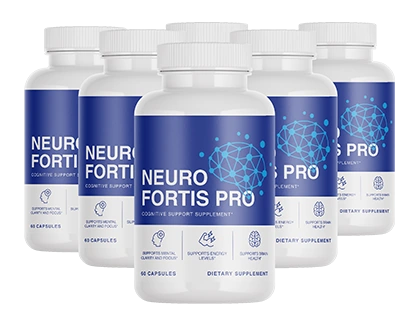
Neuro Fortis Pro lists its standardized huperzine A amount on the Supplement Facts panel, beside bacopa, lion’s mane, ginkgo, green tea and grape seed. The six-bottle bundle is the best value at $49 per bottle, with free U.S. shipping and a 60-day guarantee.
Check today’s Neuro Fortis Pro pricing — from $49/bottleIs huperzine A safe, and what are the cautions?
For most healthy adults, a small microgram dose of huperzine A from a reputable, standardized supplement is generally considered well tolerated, but that is not the same as “risk-free for everyone.” Because it acts on cholinergic pathways, it is not an ingredient to combine casually with prescription medicines — particularly cholinergic drugs or heart-rhythm treatments — without medical guidance. This table summarizes the practical points to keep in mind. MedlinePlus lists the known cautions and interactions in plain language (MedlinePlus — Huperzine A).
| Consideration | What to keep in mind |
|---|---|
| Form | Use a standardized extract so the microgram amount per serving is consistent. |
| Amount | More is not better; stick to the label serving rather than stacking multiple sources. |
| Timing | Often cycled with breaks rather than taken continuously; follow the product’s directions. |
| Medication check | Talk to a doctor first if you take any prescription drug, especially cholinergic or heart-rhythm medicines. |
| Who should skip it | Pregnant or nursing, under 18, or managing a diagnosed condition — ask a professional before use. |
None of this is cause for alarm; it is simply the ordinary due diligence any potent, precisely dosed ingredient deserves. For the wider context, our guide on improving memory and focus naturally puts supplements in their proper supporting place.
How do you choose a huperzine A supplement wisely?
A wise huperzine A supplement is one that is honest about the dose, standardized for consistency, and blended with better-studied nutrients rather than sold as a miracle in isolation. Rather than chasing the biggest number, look for a formula where huperzine A plays its supporting role. Our wider checklist on how to choose a brain supplement applies the same test to every active on a panel.
- Check the Supplement Facts so you can see the exact standardized microgram amount, not just a proprietary-blend total.
- Favor a blend that pairs huperzine A with staples like bacopa, lion’s mane and ginkgo.
- Prefer modest, sensible dosing over the largest number on the shelf.
- Look for third-party quality signals such as GMP manufacturing and made-in-USA sourcing.
- Take it consistently — for Neuro Fortis Pro, one capsule with a meal — and give any routine time.
- Loop in your doctor if you take medication or manage a health condition.
When should you talk to a doctor?
Huperzine A is a supporting nutrient for a healthy mind, not a substitute for medical care, so a quick professional conversation is always the safest first step. Speak with your doctor before using it if you are pregnant or nursing, under 18, take any medication, live with a diagnosed condition, or notice persistent, sudden or worsening changes in memory, mood or thinking. That single check makes sure anything you add fits safely with your care.
Frequently asked questions
What is a typical huperzine A dosage?
In everyday nootropic supplements, huperzine A is usually dosed in micrograms rather than milligrams — most commonly somewhere between about 50 and 200 micrograms per serving. It is a finishing-touch ingredient, so a little goes a long way, and it is often cycled rather than taken continuously.
What are the main huperzine A benefits people look for?
Huperzine A is studied for its role as an acetylcholine-supporting compound, and people typically choose it for everyday memory and focus support. Human evidence is still developing, so it is best viewed as one supporting nutrient within a wider formula rather than a stand-alone answer.
Where does huperzine A come from?
Huperzine A is a compound purified from Huperzia serrata, a Chinese club moss traditionally used in folk practice. Modern supplements use a standardized extract so the microgram amount per serving is consistent.
How much huperzine A is in Neuro Fortis Pro?
Neuro Fortis Pro uses huperzine A as the finishing touch on a bacopa, lion’s mane, ginkgo, green tea and grape seed base. The exact standardized microgram amount is listed on the Supplement Facts panel, which you can check on the product page before you buy.
Is it better to take huperzine A alone or in a blend?
Most people use huperzine A inside a blend rather than on its own, because it is designed to complement calming and circulatory botanicals. A formula like Neuro Fortis Pro pairs a small, measured amount with better-studied nootropic staples.
Who should avoid huperzine A?
Anyone pregnant or nursing, under 18, taking medication — especially cholinergic or heart-rhythm drugs — or living with a diagnosed condition should talk to a doctor before using huperzine A or any supplement that contains it.
Try Neuro Fortis Pro risk-free for 60 days →
Neuro Fortis Pro is a dietary supplement, not a treatment for any medical condition. These statements have not been evaluated by the Food and Drug Administration. This product is not intended to diagnose, treat, cure or prevent any disease. Always consult a qualified healthcare professional about your individual needs.
References & further reading
- National Center for Complementary and Integrative Health (NCCIH). Cognitive Health. NCCIH — Cognitive Health
- Yang G, Wang Y, Tian J, Liu J-P. Huperzine A for Alzheimer’s disease: a systematic review and meta-analysis of randomized clinical trials. PLoS One, 2013. Yang G et al., PLoS One 2013 (PMID 24086396)
- Qian ZM, Ke Y. Huperzine A: is it an effective disease-modifying drug for Alzheimer’s disease? Frontiers in Aging Neuroscience, 2014. Qian ZM & Ke Y, Front Aging Neurosci 2014 (PMID 25191267)
- MedlinePlus (U.S. National Library of Medicine). Huperzine A. medlineplus.gov/druginfo/natural/764.html
- Examine.com. Huperzine A — evidence-based summary. examine.com/supplements/huperzine-a
These references describe the ingredient in general terms and do not constitute evidence that any product treats, cures or prevents any condition.