Do nootropics really work? An honest Neuro Fortis Pro review for 2026
Do nootropics really work? For a handful of well-studied ingredients the honest answer is a qualified yes — effects are real but usually modest — while for many trendy compounds the evidence is thin, mixed or short-term. Nootropics support a healthy routine; they are not a treatment for any condition, and no supplement replaces sleep, movement and good food.
Whether brain supplements are worth it, in one honest snapshot.
- The short answer
- A few nutrients — caffeine, L-theanine, bacopa — have measurable effects in trials; many popular ones do not. Expect a small lever, not a switch.
- The strongest evidence
- Caffeine + L-theanine for short-term focus, and bacopa monnieri for memory support taken daily over several weeks.
- What they are not
- Not a drug, not a diagnosis, not a cure. Over-the-counter nootropics are not evaluated by the FDA the way medicines are.
- Are they worth it?
- Potentially, once the basics are handled — and only with realistic expectations and, if you take medication, a doctor’s okay.
“Nootropic” has become a marketing word, stretched to cover everything from a cup of coffee to compounds with almost no human data. That makes a plain claim-check useful. Below we separate what the research genuinely supports from wishful thinking, and we are candid about where a formula like Neuro Fortis Pro sits: a well-formulated everyday supplement, not a miracle.
What exactly is a nootropic?
A nootropic is any substance taken with the intention of supporting some aspect of thinking — attention, memory, mental energy or calm focus. The word covers three very different tiers: everyday stimulants like caffeine, well-studied dietary botanicals like bacopa monnieri and ginkgo, and prescription drugs that are outside the scope of any supplement. Conflating those tiers is the single biggest reason people feel misled, because the evidence and the risks are not remotely the same across them. That definition covers two very different families, which our comparison of natural vs synthetic nootropics untangles.
Do brain supplements work, or is it all placebo?
Brain supplements work for some ingredients and not for others, and separating the two is the whole game. The placebo effect is real and large in cognition studies, which is exactly why the quality of a trial matters more than a bold label. When researchers use randomised, placebo-controlled designs, a small group of ingredients still show measurable effects — and many popular ones quietly do not.
Where the evidence is genuinely encouraging
The caffeine-and-L-theanine combination has some of the most reproducible short-term data for alertness and focused attention, which is why it appears in so many focus products. Bacopa monnieri, taken daily over several weeks, has repeated trials pointing to modest memory and learning support. These are not dramatic effects, but they survive careful study. A review of the acute effects of the tea constituents L-theanine, caffeine and EGCG on cognition and mood covers what that pairing does and does not do (Camfield DA et al., Nutr Rev 2014).
Where the evidence is thin or mixed
Many heavily marketed compounds rest on animal studies, tiny trials or theory alone. Ginkgo biloba and lion’s mane, for example, have long traditions and promising early work but inconsistent human results, so they belong in the “plausible, not proven” column. Honesty here is a feature, not a weakness: a brand that admits the limits is easier to trust than one that promises a genius pill. Ginkgo is the cautionary case: a Cochrane systematic review found the evidence for cognitive impairment and dementia inconsistent and unreliable (Wieland LS et al., Cochrane Database Syst Rev 2026).
Which nootropic ingredients have the most evidence?
The strength of nootropic evidence varies enormously by ingredient, so a single verdict on “nootropics” is meaningless. The table below grades some of the best-known ingredients by how much human data supports them, in plain terms rather than marketing ones. A systematic review of dietary supplement ingredients for optimising cognitive performance in healthy adults reached the same split verdict (Crawford C et al., J Altern Complement Med 2021).
| Ingredient | Human evidence | What it is studied for |
|---|---|---|
| Caffeine + L-theanine | Stronger, short-term | Alertness and calm, focused attention within about an hour. |
| Bacopa monnieri | Moderate, over weeks | Everyday memory and learning support with daily use. |
| Ginkgo biloba | Mixed | Circulation and mental sharpness; results are inconsistent. |
| Lion’s mane | Preliminary | Focus and cognition; mostly small or early-stage studies. |
| Green tea polyphenols | Emerging | Working memory and antioxidant support. |
| Huperzine A | Limited | Used in small amounts; human data is early and cautious. |
Notice the pattern: the ingredients with the best data are also the least glamorous. A sensible formula leans on the studied end of this list and is transparent about the rest — which is how we assess Neuro Fortis Pro’s bacopa, lion’s mane and huperzine A blend in our ingredient deep-dive.
See the exact dose in Neuro Fortis Pro
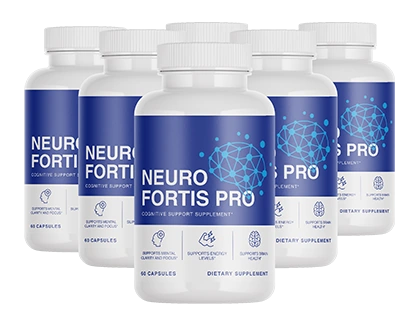
Rather than promise a miracle, Neuro Fortis Pro lists its bacopa, lion’s mane, ginkgo, green tea and grape seed amounts on the label. The six-bottle bundle is the best value at $49 per bottle, with free U.S. shipping and a 60-day guarantee.
Check today’s Neuro Fortis Pro pricing — from $49/bottleAre nootropics worth it? Setting realistic expectations
Nootropics are worth it only when your expectations match the evidence: a small, sometimes subtle edge layered on top of good habits, not a shortcut around them. The most common disappointment comes from people who skip sleep, skip exercise and expect a capsule to compensate. The second most common comes from marketing that overpromises. This table reframes what a realistic result looks like.
| Common expectation | Realistic outcome | What actually moves the needle |
|---|---|---|
| Instant genius or perfect recall | Not supported by evidence | Sleep, focused practice, managing stress |
| Steadier daily focus | Plausible for some, modest | Caffeine + L-theanine, a walk before work |
| Better memory in a week | Usually too soon | Bacopa over 4–12 weeks, consistent routine |
| Replace medication | Never appropriate | A doctor’s guidance and prescribed care |
| One dose fixes brain fog | Rarely; fog is multi-factor | Hydration, sleep, movement, whole foods |
Read that way, a nootropic can be a reasonable purchase — it just has to earn its place beside the basics. If brain fog is your main concern, our guide on how to clear brain fog naturally covers the habit side, and improving memory and focus naturally lays out the full routine.

How does Neuro Fortis Pro handle the claims?
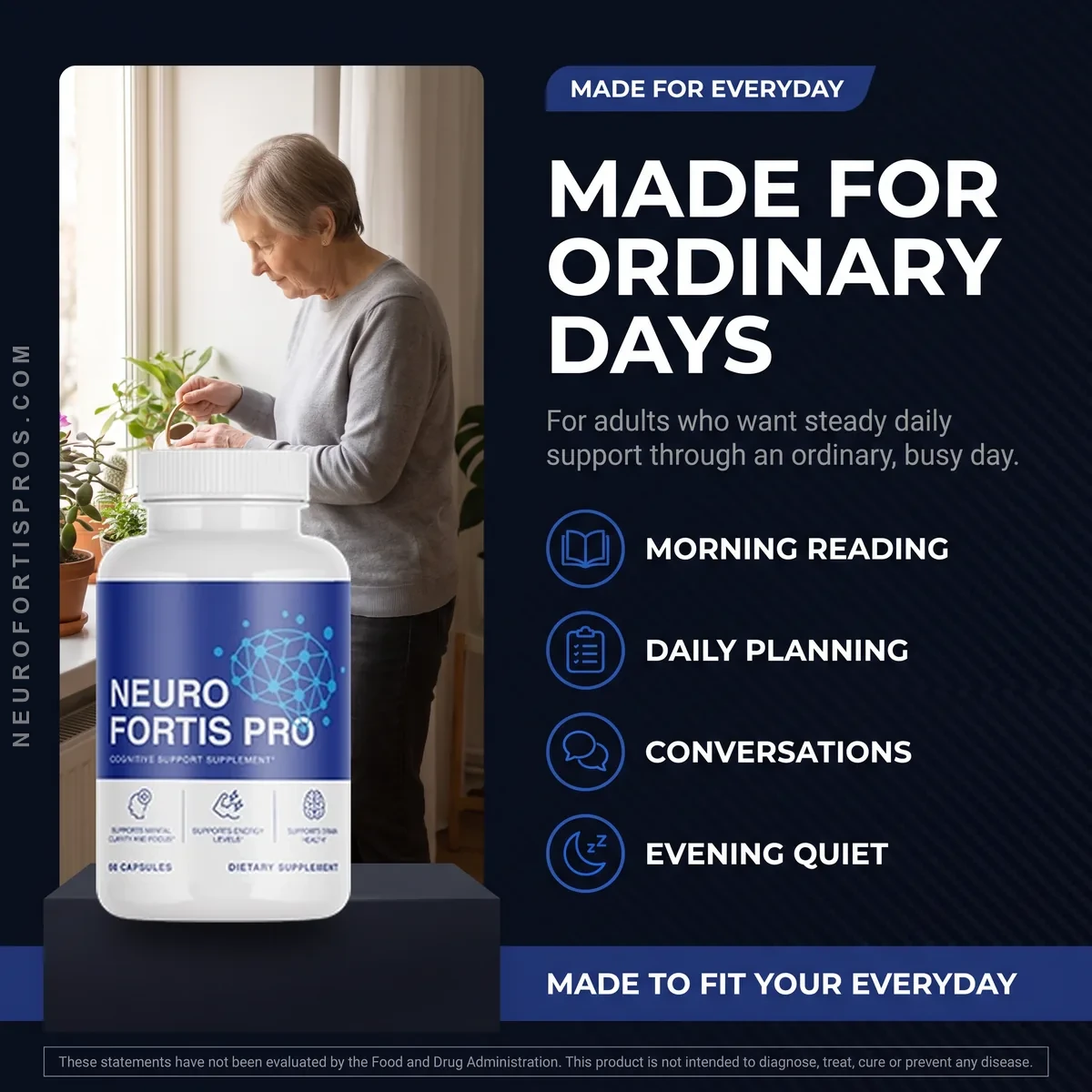
Neuro Fortis Pro is presented as a dietary supplement for everyday cognitive wellness, not as a treatment, cure or preventive for any disease. That distinction is deliberate and it is the honest one: its statements have not been evaluated by the Food and Drug Administration, and the label describes well-known botanicals at disclosed amounts rather than making medical promises. In a category full of “limitless” language, a no-medical-claims stance is the point — it keeps the product on the right side of both the evidence and the law.
Practically, that means the formula leans on ingredients with recognised traditions — bacopa, lion’s mane, ginkgo, green tea and grape seed extract — and asks to be judged over weeks of consistent use, the way those botanicals are studied. You can see the amounts in the ingredients section and decide for yourself.

Who might consider a nootropic, and who should wait?
A nootropic supplement is best considered by generally healthy adults who already have their sleep, movement and nutrition reasonably in order and want a modest, well-tolerated addition. It is not for everyone. If you are pregnant or nursing, under 18, taking any medication, or managing a diagnosed condition, the right first step is a conversation with your doctor — not a supplement. The same applies to anyone noticing persistent, sudden or worsening changes in memory, mood or thinking, which always warrant medical attention rather than self-treatment. If you are shopping on behalf of an older parent, our guide to memory supplements for seniors covers the format and interaction questions that matter most there.
The honest bottom line
The honest bottom line is that nootropics work for a narrow, well-studied set of ingredients and mostly disappoint outside it — so the real question is not “do they work?” but “which ones, for whom, and at what expectation?” Judged that way, a transparent formula built on studied botanicals and no medical claims is a defensible choice for a healthy adult who has the basics handled. Try it for long enough to be fair, keep the habits that do the heavy lifting, and treat any capsule as the last five percent rather than the first.
Frequently asked questions
Do nootropics really work?
It depends on the ingredient and the person. A few well-studied nutrients such as caffeine, L-theanine and bacopa monnieri have measurable effects on alertness or memory in trials, while many trendy compounds have thin or mixed evidence. Nootropics support a healthy routine rather than deliver a dramatic, reliable boost for everyone, and they are not a treatment for any condition.
Do brain supplements work as well as prescription medicines?
No, and honest brands do not claim they do. Over-the-counter nootropic supplements are not drugs, are not intended to diagnose or treat any disease, and are not evaluated by the FDA the way medicines are. Anyone with a diagnosed condition should speak with a doctor rather than substitute a supplement.
Are nootropics worth it for a healthy person?
For some people they are a modest, worthwhile addition once sleep, exercise and diet are already in place; for others the effect is subtle or hard to notice. They are best viewed as a small lever on top of the basics, not a replacement for them, and value depends on realistic expectations.
What is the strongest nootropic evidence?
The caffeine-plus-L-theanine pairing has some of the most consistent short-term data for attention, and bacopa monnieri has repeated trials for memory support taken over several weeks. Ginkgo and lion’s mane have longer traditions but more mixed or preliminary human evidence.
Does Neuro Fortis Pro make any medical claims?
No. Neuro Fortis Pro is presented as a dietary supplement for everyday cognitive wellness, not as a treatment, cure or preventive for any disease. Its statements have not been evaluated by the FDA, and the label focuses on well-known botanicals at disclosed amounts rather than on medical promises.
How long before nootropics might help?
Stimulant-type effects from caffeine can be felt within an hour, while botanicals such as bacopa are typically studied over four to twelve weeks of daily use. If you try a formula, give it a consistent multi-week run before judging it, and remember that individual results vary.
See the exact dose in Neuro Fortis Pro — risk-free for 60 days →
Neuro Fortis Pro is a dietary supplement, not a treatment for any medical condition. These statements have not been evaluated by the Food and Drug Administration. This product is not intended to diagnose, treat, cure or prevent any disease. Always consult a qualified healthcare professional about your individual needs.
References & further reading
- National Center for Complementary and Integrative Health (NCCIH). Cognitive Health. NCCIH — Cognitive Health
- Kongkeaw C, et al. Meta-analysis of randomized controlled trials on Bacopa monnieri extract and cognition. J Ethnopharmacol, 2014. Kongkeaw C et al., J Ethnopharmacol 2014 (PMID 24252493)
- Camfield DA, et al. Acute effects of L-theanine and caffeine on attention. (PubMed 24946991) Camfield DA et al., Nutr Rev 2014 (PMID 24946991)
- National Center for Complementary and Integrative Health (NCCIH). Ginkgo. NCCIH — Ginkgo
- Examine.com. Nootropics — evidence-based overview. examine.com/categories/nootropic
- Mayo Clinic. Memory loss: When to seek help. mayoclinic.org/memory-loss
These references describe the ingredients and habits in general terms and do not constitute evidence that any product treats, cures or prevents any condition.