How to increase attention span naturally: the Neuro Fortis Pro guide
To increase your attention span naturally means training the brain to hold focus for longer through better sleep, movement, nutrition and deliberate single-tasking — and, if you choose, supporting the effort with well-studied nutrients such as bacopa and lion’s mane. It is about protecting attention from the everyday drains that fragment it, not chasing a single overnight trick.
How to hold attention through a busy day, in one place.
- The short version
- Remove the biggest drains on focus — poor sleep, notifications, stress and blood-sugar swings — then practise holding attention in single-tasked blocks.
- Fastest win
- One quiet, notification-free block of 25–45 minutes, ideally after a short walk, is the highest return for the lowest effort.
- Biggest levers
- Consistent sleep and daily movement do the heavy lifting; whole-food nutrition and focus practice compound over weeks.
- Where a capsule fits
- Nutrients such as bacopa, lion’s mane and ginkgo — combined in Neuro Fortis Pro — can support the routine, but they are not a treatment for any disease.
If you sit down to work and reach for your phone before the first paragraph is done, you already know how slippery attention has become. The good news is that attention is trainable: it responds to the conditions you give it. This guide covers how to increase attention span naturally, the habits that matter most, and where a once-daily nootropic like Neuro Fortis Pro can support the effort.

What is an attention span, and what is normal?
An attention span is the length of time you can hold focus on a single task before your mind naturally drifts. There is no official number: sustained attention on a demanding task typically runs in blocks of roughly 20 to 45 minutes before a dip, after which a short break restores it. Interest, sleep, stress and the task itself all move that figure, so “normal” is really a range you can widen with practice rather than a fixed limit you are stuck with.
Why is my attention span so short?
A short attention span is almost always the sum of ordinary drains rather than a single fault. Broken or insufficient sleep blunts the next day’s focus; a stream of notifications trains the brain to expect interruption; chronic stress floods it with cortisol that interferes with concentration; and even mild dehydration or a blood-sugar crash from refined food pulls attention off task. Frequent task-switching adds its own cost, leaving a residue that makes the next stretch of focus harder. The encouraging part is that every one of these is something you can change. The same drains show up in our wider guide to improving memory and focus naturally.
How do you increase your attention span naturally?
Increasing your attention span naturally comes down to two moves: removing the things that fragment focus, and deliberately practising the act of holding it. The habits below are ordered roughly by return on effort, and they stack — each helps a little, and together they help a lot.
Protect your sleep before anything else
Sleep is when the brain consolidates learning and clears metabolic waste, which is why it is the single strongest lever for attention. Aim for seven to nine hours on a consistent schedule; a steady bedtime matters as much as the total. One short night measurably narrows the focus you can hold the following day, and no habit or capsule can substitute for it.
Move your body to prime focus
Physical activity raises blood flow to the brain and supports the growth factors involved in learning and attention. You do not need a gym — a brisk ten-minute walk before a demanding task reliably lifts alertness for the hour that follows, which makes movement one of the fastest same-day wins available.
Work in single-tasked blocks
Attention is a muscle, and modern life trains the opposite of it. Choose one task, silence non-essential notifications, and work in a focused block of 25 to 45 minutes followed by a genuine break. Each block you complete without switching gently extends the span you can hold next time; the practice itself is the training.
Steady your blood sugar and hydration
What steadies your blood sugar tends to steady your focus. Build meals around fibre, protein and healthy fats rather than refined carbohydrates that spike and crash, and keep water within reach — because even mild dehydration dents concentration. Green tea is a quiet ally here, pairing hydration with polyphenol antioxidants and a little calm-focus L-theanine.
Manage the stress that scatters attention
Chronic stress keeps the mind scanning for threats, which is the opposite of sustained focus. Short, repeatable decompression — a walk, slow breathing, a few minutes outdoors — lowers that background noise so attention has somewhere to settle. Treat it as maintenance, not a luxury.
See the exact dose in Neuro Fortis Pro →
Which nutrients support attention and focus?
Nutrients are a support to the habits above, not a substitute, and never a treatment for any condition. That said, several have a long history in the focus-and-attention conversation. The table below summarises the best-known ones, several of which appear together in Neuro Fortis Pro. NCCIH’s cognitive-health summary is a fair baseline for what any of them can do (NCCIH — Cognitive Health).

| Nutrient | Category | Why it is discussed for attention |
|---|---|---|
| Bacopa monnieri | Ayurvedic herb | One of the most researched botanicals for everyday memory and learning support. |
| Lion’s mane | Culinary mushroom | A traditional East Asian food, popular in modern nootropics for focus and cognition. |
| Ginkgo biloba | Traditional herb | Long used to support healthy circulation and everyday mental sharpness. |
| Green tea | Polyphenol source | Studied for working memory; pairs antioxidants with calm-focus L-theanine. |
| Huperzine A | Plant alkaloid | A club-moss extract included in many nootropic blends for cognitive support. |
Neuro Fortis Pro brings these together in a single daily capsule: bacopa, lion’s mane, ginkgo, green tea and grape seed extract with huperzine A. For a deeper look at the science, read our guide to bacopa, lion’s mane and huperzine A, or the companion piece on L-theanine for calm focus. Bacopa has randomised trials of standardised extract behind it (Kumar N et al., Evid Based Complement Alternat Med 2016), and green tea extract has been imaged during a working-memory task (Schmidt A et al., Psychopharmacology 2014).
Make focus a daily habit
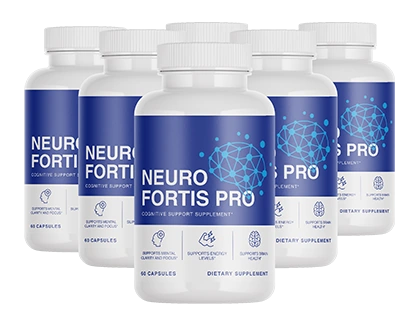
Neuro Fortis Pro is a once-daily capsule pairing bacopa and lion’s mane with a nootropic botanical blend to support a healthy, focused mind. The six-bottle bundle is the best value at $49 per bottle, with free U.S. shipping and a 60-day guarantee.
Check today’s Neuro Fortis Pro pricing — from $49/bottleWhat does a simple daily focus routine look like?
The best routine is the one you will actually keep. Rather than overhauling your day, stack one small habit at a time until each runs on autopilot:
- Anchor a consistent bedtime so sleep does the heavy lifting for attention.
- Take a ten-minute walk immediately before your most demanding block of work.
- Run one 25–45 minute single-tasked block with every non-essential notification silenced.
- Build meals around fibre, protein and colourful plants to avoid mid-afternoon crashes.
- Keep water on the desk and swap one sugary drink for green tea.
- Take any supplement at the same time daily — for Neuro Fortis Pro, one capsule with a meal.

Which habits lengthen attention fastest?
A “fast” habit is one you can feel within a day; a “slow” habit reshapes your baseline over weeks. Both matter for a longer attention span. This table sorts the core tactics by how quickly they help and how much effort they ask.
| Habit | Typical time to notice | Everyday effort |
|---|---|---|
| Ten-minute walk before focused work | Same day | Low |
| One notification-free single-tasked block | Same day | Low |
| Water on the desk, swap sugary drinks | Days | Low |
| Whole-food, higher-fibre meals | Days to weeks | Medium |
| Consistent seven-to-nine-hour sleep | Weeks | Medium |
| Regular exercise & daily focus practice | Weeks to months | Higher |
Consistency turns any of these into a steadier month. Botanicals build their support gradually too, so many people choose a multi-month supply to avoid running out mid-routine — compare the packages and pricing on the homepage, or read the full Neuro Fortis Pro review. If your current focus tool is a third coffee, our comparison of nootropics vs coffee for focus explains why the two run on different clocks.
How does Neuro Fortis Pro fit a focus routine?
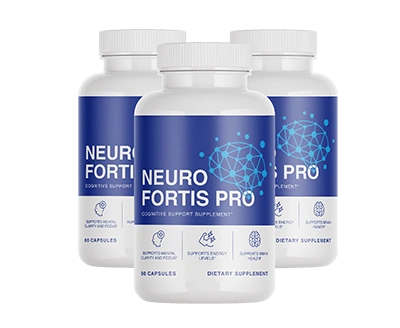
Neuro Fortis Pro is a once-daily nootropic capsule designed to support a healthy, focused mind alongside the habits above, not to replace them. Its role is simple: it folds several of the most-discussed cognitive botanicals — bacopa, lion’s mane, ginkgo, green tea and grape seed extract with huperzine A — into one capsule you take with a meal, so the supplement step of your routine is a single decision. It supports good sleep, movement and focus practice, and is not intended to diagnose, treat, cure or prevent any disease.
When should you talk to a doctor?
Natural habits are for supporting a healthy mind; they are not a replacement for medical care. Speak with your doctor if you are pregnant or nursing, under 18, take any medication, have a diagnosed condition, or notice persistent, sudden or worsening difficulty with attention, memory or mood. A quick conversation ensures anything you add fits safely with your care.
Frequently asked questions
How can I increase my attention span naturally?
Protect consistent sleep, move your body most days, work in single-tasked blocks with notifications off, and steady your blood sugar with whole foods. Well-studied nutrients such as bacopa and lion’s mane can support the effort, but they are not a treatment for any condition.
What is a normal attention span?
Sustained attention on a single demanding task typically runs in blocks of roughly 20 to 45 minutes before a natural dip, after which a short break restores it. There is no single official number, and it varies with sleep, interest, stress and the task itself.
Why is my attention span so short?
Short attention is usually the sum of ordinary factors: broken sleep, constant notifications, chronic stress, dehydration and blood-sugar swings. Frequent task-switching also trains the brain to disengage quickly, which shortens the focus you can hold.
How long does it take to lengthen my attention span?
A good night’s sleep, a short walk or a quiet, single-tasked hour can help the same day. Rebuilding a longer baseline through steady sleep, exercise and focus practice usually takes several weeks, and botanicals build their support gradually.
Does Neuro Fortis Pro help you focus?
Neuro Fortis Pro is a once-daily nootropic capsule combining bacopa, lion’s mane, ginkgo, green tea and grape seed extract with huperzine A. It is designed to support a healthy mind alongside good habits, not to replace them or treat any disease.
Can screens really shorten attention?
Heavy, fragmented screen use trains fast switching and frequent novelty-seeking, which can make sustained focus feel harder. Deliberate single-tasking, notification-free blocks and screen-free breaks help rebuild the ability to hold attention.
Try Neuro Fortis Pro risk-free for 60 days →
Neuro Fortis Pro is a dietary supplement, not a treatment for any medical condition. These statements have not been evaluated by the Food and Drug Administration. This product is not intended to diagnose, treat, cure or prevent any disease. Always consult a qualified healthcare professional about your individual needs.
References & further reading
- National Center for Complementary and Integrative Health (NCCIH). Cognitive Health. NCCIH — Cognitive Health
- MedlinePlus (National Library of Medicine). Memory and concentration. medlineplus.gov/ency/article/003257.htm
- Kumar N, et al. Standardized Bacopa monnieri and cognitive function. (PMC5075615) Kumar N et al., Evid Based Complement Alternat Med 2016 (PMC5075615)
- Schmidt A, et al. Green tea extract and working-memory processing. (PMC4159594) Schmidt A et al., Psychopharmacology 2014 (PMC4159594)
- Examine.com. Bacopa monnieri — evidence-based summary. examine.com/supplements/bacopa-monnieri
- Mayo Clinic. Memory loss: 7 tips to improve your memory. mayoclinic.org/healthy-lifestyle/healthy-aging
These references describe the ingredients and habits in general terms and do not constitute evidence that any product treats, cures or prevents any condition.